
Have Cows Run Dry? Kenya’s Milk Shortage Explained
Smallholder dairy farmers, who account for approximately 80 per cent of the country’s milk supply, are facing declining yields amid poor pasture and escalating animal feed costs.
Kenya is not experiencing a milk production shortage, but surging demand is putting pressure on the country’s dairy supply chain.
Official government figures show that annual milk production rose from 4.6 billion litres in 2021 to 5.6 billion litres in 2025, a 22 per cent increase. Additionally, milk intake by processors surged by 34 per cent.
Despite the drought, processed milk intake between January and August 2026 was only 1 per cent less than the previous period in 2025.
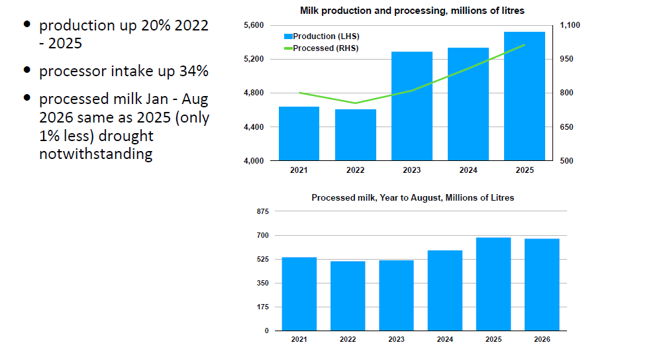
Source: Government of Kenya
The Chairperson of the President’s Council of Economic Advisors (CEA), Dr David Ndii, speaking at the 2026 NCBA Economic Forum in Nairobi, attributed the ongoing milk stockout in supermarkets to stronger consumer demand for the commodity.
Data from the Kenya National Bureau of Statistics (KNBS) shows that formal-sector milk intake declined by 5 per cent, from 88.89 million litres in May 2026 to 84.44 million litres in June 2026. The June intake was also 6.4 per cent less than 90.24 million litres recorded in the previous year.
In addition, smallholder dairy farmers, who account for approximately 80 per cent of the country’s milk supply, are facing declining yields amid poor pasture and escalating animal feed costs.
In September, the government said the prolonged drought had caused a 3.7 per cent decline in formal milk deliveries to processors. Livestock and Development Principal Secretary (PS), Jonathan Mueke, attributed the decline primarily to prolonged dry conditions that have reduced pasture and increased pressure on animal feeds.
The PS added that reduced feed availability has lowered milk production, limiting supplies to processors and causing intermittent shortages of some milk brands and pack sizes in retail outlets.
The shortage has altered how farmers sell their milk, with many opting for buyers who pay cash instead of processors and supermarkets whose payment arrangements can delay their earnings.
Dairy farmers have traditionally been receiving between Ksh40 and Ksh50 per litres from processors, but the shortage has created opportunities to sell directly to buyers offering better prices. Some are now selling the milk directly to consumers at Ksh80 per litre at their farm gate.
Initial figures from the Kenya Dairy Board (KDB) show that the situation has affected milk deliveries to processors, with New Kenya Cooperative Creameries (New KCC) declining by about 5 per cent in July and August.
However, KDB says milk supplies could begin stabilising within a month if rainfall improves and fodder availability recovers.