
What is inflation, really?
Inflation has caused a swift rise in the cost of living, especially as people's wages do not increase as quickly as inflation.
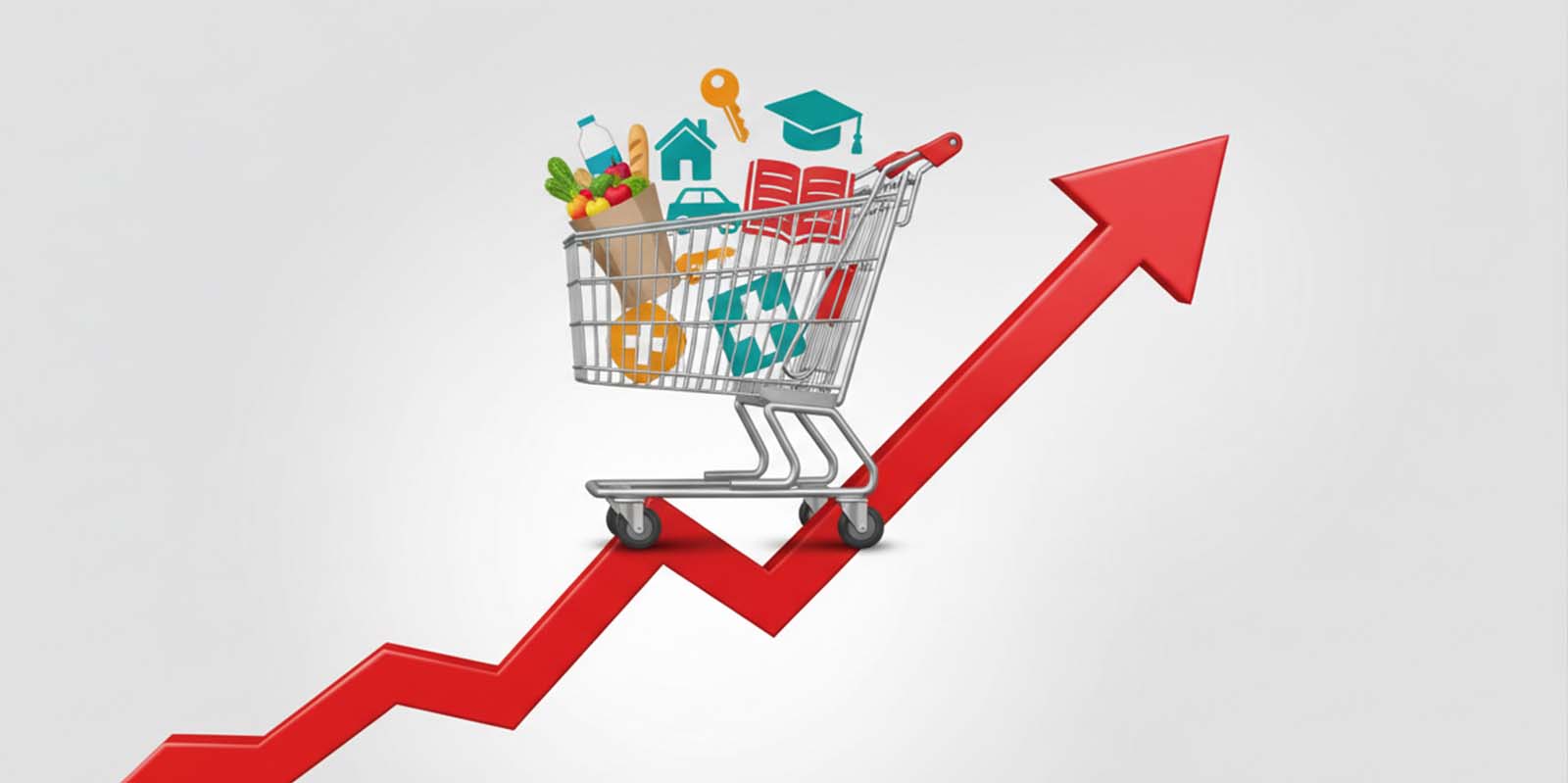
What is inflation?
Inflation is the measure of how the prices of goods or services have changed over time. Remember that as the cost of things goes up, the Kenyan Shilling devalues, and your KSh 1000 does not stretch as much as it did before.
How is inflation calculated?
The measure of inflation is the inflation rate, which is calculated monthly by the Kenya National Bureau of Statistics (KNBS).
To perform the calculation, KNBS uses the Consumer Price Index (CPI), a basket which covers goods and services drawn from a wide selection of household consumption categories, including food, housing, transport, education, and healthcare.
The basket is a mirror of what a typical Kenyan household spends on in a month. Given that some items are more critical than others, they carry more weight when calculating the average retail price of all items in the basket to determine the basket price.
The rate at which the basket price changes over time, either month-to-month or year-on-year, is known as the inflation rate.
Causes of inflation
There are numerous factors that have an impact on inflation in Kenya.
Food is a key component of the basket, and food prices can be affected by drought or excessive rain.
Changes in oil prices, driven by a variety of international factors such as war and sanctions, can lead to fluctuations in energy and transport costs, affecting almost everything in the basket. Yes, the war in Ukraine, Iran directly impacts you.
As Kenya imports most of the goods consumed in the country, the strength of the Kenyan shilling against other currencies has a major impact on the basket.
A rise or fall in the amount of money people can spend affects the demand and supply of goods and services, which in turn affects the prices of goods.
Current situation
According to KNBS, Kenya’s annual consumer price inflation was 4.3 per cent in February 2026. The price increase was primarily driven by a rise in prices of items in the Food and Non-Alcoholic Beverages category (7.3%) and Transport category (4.0%) over the one-year period. Food and transport are the most critical in most households, and rises in these two categories greatly erode the value of money and raise the cost of living.
How to beat inflation
Savings accounts and fixed deposits offer safety, but the returns are usually lower than the inflation rate. Therefore, one should shop for better stores of value.
Government-backed bonds offer better rates in addition to a modicum of safety.
Buying shares of well-performing listed companies and holding the stock for the long term.
Investment in land or property is prudent. In real estate, one can either own property directly or invest in Real Estate Investment Trusts (REITs).
Buying commodities like gold and oil acts as a hedge since they preserve value.
Conclusion
Overall, a diversified investment portfolio with different assets helps spread inflationary risk. Also, getting expert advice enables you to tap into opportunities and mitigate risks.